


Three common modification methods for bentonite
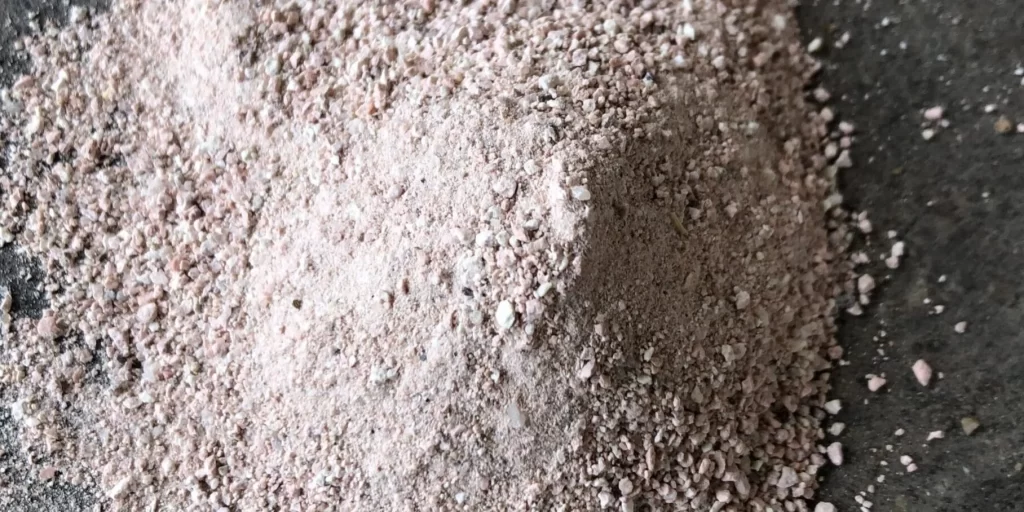
Natural bentonite has extremely strong hydrophilicity and readily combines with water molecules in wastewater, making solid-liquid separation difficult after adsorption and limiting its application. Modified bentonite not only has much greater adsorption performance than natural bentonite but also expands its application range. Currently, there are many methods for modifying bentonite, commonly including activation modification, sodium modification, and modification with added modifiers.
I. Activation Modification
Activation modification involves activating natural bentonite using certain methods to enhance its adsorption performance. Commonly used activation methods include acidification activation, calcination activation, and inorganic salt activation.
(1) Acidification Activation
Acidification activation involves treating natural bentonite with acids of different concentrations, causing the Na+, Mg2+, K+, Ca2+, and other cations between the bentonite layers to be converted into soluble salts and dissolved, thereby weakening the bond energy between montmorillonite crystal layers, increasing the interlayer spacing, and forming a porous active material with a microporous mesh structure and a larger specific surface area. Commonly used acids include sulfuric acid and hydrochloric acid.
(2) Calcination Activation Method
The calcination activation method involves calcining bentonite at different temperatures to activate and modify it. When heated, bentonite loses interlayer water, bound water, and impurities in the pores, thereby increasing its specific surface area and porosity, reducing adsorption resistance caused by water films and impurities, and improving adsorption performance. A calcination temperature of 400-450℃ yields the best modification effect. High-temperature calcination activation modification requires strict control of calcination temperature and time; excessively high calcination temperatures or excessively long calcination times can easily lead to a decrease in bentonite activity.
(3) Salt Activation Method
The salt activation method typically uses halides of metal ions such as Na, Mg, Al, and Fe, as well as nitrates, as modifiers to treat bentonite. These metal cations balance the negative charge on the silicon-oxygen tetrahedra of bentonite. Because these cations have low valence and large radii, the interaction between them and the bentonite structural unit layers is weak, resulting in good ion exchange performance of bentonite.
II. Sodium Modification Method
The sodium modification method is mainly used for modifying calcium-based bentonite. Commonly used modification methods include suspension method, dry mixing method, wet stacking method, and wet extrusion method. Commonly used sodium modifiers include Na₂CO₃ and NaCl. The modification principle is through ion exchange, where Na⁺ replaces Ca²⁺ in the interlayer, creating a positive charge depletion. The Na⁺ adsorbed on the outer surface of the crystal and between the crystal layers then balances the negative charge.
Adsorption of Cd²⁺ using calcium-based bentonite and sodium-modified calcium-based bentonite showed that the saturated adsorption capacities of calcium-based bentonite and sodium-modified calcium-based bentonite were 2.96 mg/g and 8.45 mg/g, respectively. The adsorption capacity of sodium-modified calcium-based bentonite for Cd²⁺ was significantly greater than that of calcium-based bentonite.
III. Modification Method with Additive Modifiers
Modified bentonite obtained by the additive modifier method can be divided into three types: organic bentonite, cross-linked bentonite, and organic-cross-linked bentonite. Organic cross-linked bentonite involves introducing cationic surfactants with carbon chain lengths greater than 12 (such as quaternary ammonium salts like CTAB and CTAC) into the interlayer space of cross-linked bentonite for modification, resulting in organic cross-linked bentonite with larger pore sizes and further enhancing its adsorption performance.
Adding modifiers to bentonite can alter its specific surface area and increase interlayer spacing, thereby improving its adsorption performance. This is one of the main methods currently used for bentonite modification.