


A “Master Purifier” in Daily Life—Powdered Activated Carbon
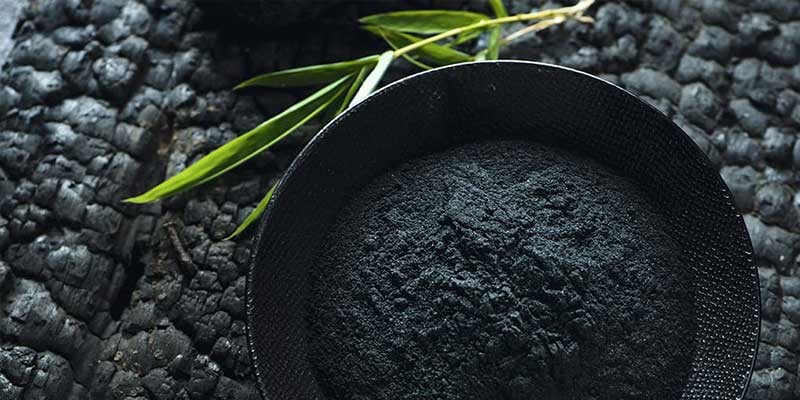
Powdered Activated Carbon (PAC) is a carbonaceous material treated through specialized processes. It appears as a fine black powder with a particle size ranging from a mere 10 to 50 micrometers—even finer than common flour. Its core advantage stems from its unique structure: following carbonization (oxygen-free pyrolysis at 400–600°C) and activation (high-temperature pore expansion at 800–1000°C), its interior develops a dense network of micropores. This results in a specific surface area ranging from 500 to 1,500 m²/g—meaning that the surface area of just one gram of powdered activated carbon is vast enough to cover two to three standard-sized basketball courts.
This highly developed microporous structure endows it with extraordinary adsorption capabilities, allowing it to act like a “magnet,” rapidly capturing and locking away impurities, organic compounds, pigments, and toxic substances found in water, air, or other liquids. Moreover, compared to granular activated carbon, it offers faster adsorption kinetics and greater operational flexibility; it requires no complex machinery and can be added directly to a system, making it particularly well-suited for emergency treatment scenarios.
Based on their raw materials, powdered activated carbon products are primarily categorized into three types: wood-based (derived from coconut shells or wood), coal-based (derived from bituminous or anthracite coal), and shell-based (derived from walnut or apricot shells). Among these, the wood-based and shell-based varieties feature more highly developed pore structures, making them ideal for high-purity applications, while the lower-cost coal-based varieties are better suited for large-scale industrial use.
Core Application Areas: From Water Purification to Pharmaceuticals—It Is Everywhere
The scope of powdered activated carbon’s applications is far broader than one might imagine; its presence can be found in everything from small-scale processes—such as the purification of table sugar in our homes—to large-scale operations, including municipal sewage treatment and industrial waste gas purification. Categorized by sector, the primary core applications are as follows:
I. Water Treatment: Safeguarding the Purity of Every Drop
Water treatment constitutes the most significant and widespread application field for powdered activated carbon. Whether it is the drinking water we consume or the wastewater discharged by industries, neither can do without its “purifying power.”
II. Food and Pharmaceutical Industries: Ensuring Health and Quality
Many of the products we consume daily—such as white sugar, fruit juices, and pharmaceuticals—have undergone “purification processing” utilizing powdered activated carbon, though this process remains invisible to the naked eye.
In food processing, powdered activated carbon is primarily employed for decolorization and purification. For example, in the production of white sugar, after raw sugar (brown sugar) has been dissolved, the addition of powdered activated carbon adsorbs colored impurities and off-odors within the solution, thereby transforming the raw sugar into pristine white sugar. This process can reduce the color value from 150 IU to below 30 IU, with an activated carbon consumption rate of approximately 0.3 to 0.5 kg per ton of sugar solution.
III. Air Purification and Industrial Applications: Safeguarding Respiration and the Environment
Beyond its applications in water and food, powdered activated carbon plays a pivotal role in air purification and industrial production. In the realm of air purification, it effectively adsorbs harmful gases—such as formaldehyde, benzene, toluene, and VOCs (Volatile Organic Compounds)—from the atmosphere. It is frequently utilized for air purification within newly renovated homes and vehicle interiors, as well as for the treatment of industrial exhaust gases, where it removes noxious odors, dioxins, and hazardous heavy metals like mercury.
Many people confuse powdered activated carbon with granular activated carbon; however, each possesses distinct advantages and is suited to different applications. The specific differences can be summarized as follows:
Particle Size: Powdered activated carbon consists of fine particles ranging from 10 to 50 μm, whereas granular activated carbon consists of larger granules ranging from 0.5 to 4 mm.
Method of Use: Powdered activated carbon can be added directly to the medium; it is typically used on a single-pass, disposable basis and requires no fixed equipment. Granular activated carbon, conversely, must be packed into a fixed-bed column and can be regenerated via backwashing.