


Preparation of Konjac Powder
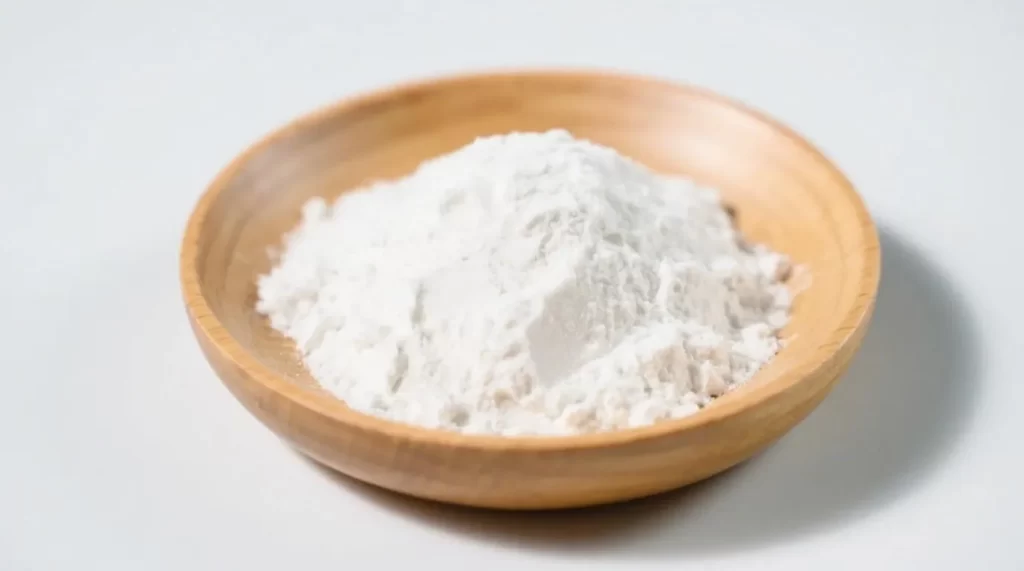
The primary functional component in konjac is glucomannan (KGM), which constitutes approximately 60% of its composition. In the food industry, glucomannan is widely utilized as a raw material or processed as a food additive in the production of various items—such as konjac tofu, health beverages, and ice cream. Industrially, glucomannan’s excellent water-absorption and swelling properties have led to its extensive application in textile and dyeing processes. In the medical field, my country has long utilized konjac for healthcare purposes, employing it in the treatment of conditions such as asthma, coughs, burns, angina, and various skin ailments. Furthermore, it possesses a range of beneficial functions—including immune support, anti-cancer properties, weight management, antioxidant effects, lipid regulation, blood sugar reduction, and anti-intoxication capabilities—making it suitable for people of all backgrounds.
Current research primarily focuses on two methods for pulverizing konjac powder: dry processing and wet processing. Dry pulverization relies mainly on mechanical means to crush the konjac; based on the desired particle size, this process is categorized into two types: coarse crushing and fine grinding. The former focuses primarily on breaking down larger particles, yielding konjac powder with a mesh size ranging only between 30 and 60. The latter, conversely, involves subjecting the pre-crushed samples to further refinement using more sophisticated equipment to produce “refined” (or “micro-fine”) konjac powder with a significantly smaller particle size range.
Mechanical Impact Pulverization
Mechanical impact pulverization is widely utilized in ultrafine grinding applications and is broadly classified into two configurations: vertical and horizontal. Studies involving materials such as crop stalks and traditional Chinese medicinal herbs suggest that, when aiming for a higher degree of fineness in konjac powder, liquid nitrogen-assisted mechanical impact pulverization can be employed. This technique effectively disrupts the heterogeneous cells within the refined konjac powder, thereby achieving a superior level of pulverization.
Vibratory Pulverization
Vibratory ultrafine pulverization technology employs spherical or rod-shaped media to process materials. Through the forces—including impact, friction, and shear—generated by high-speed vibrations, the material is reduced to an ultrafine state.
Ball Mill
Planetary ball mills, available in both horizontal and vertical configurations, are widely used for material mixing, fine grinding, small-sample preparation, nanoparticle dispersion, and the development of high-tech materials. The working mechanism of a ball mill involves grinding media (balls) interacting with the material lining the inner wall of the grinding jar; driven by gravity, centrifugal force, and friction, these balls collide with, compress, and abrade the material, thereby causing it to undergo gradual fragmentation.
Airflow Pulverization
Airflow pulverization utilizes a high-velocity airstream to drive mutual collisions and friction among material particles. When the external kinetic energy exceeds the internal energy required to overcome molecular forces, micro-cracks propagate within the crystals of the refined konjac powder. This process disrupts the cellular structure, exposing the internal glucomannan content and thereby achieving the objective of ultrafine pulverization. A commonly used device for this purpose is the turbine-type high-pressure airflow mill. During the grinding process, the high-velocity airflow passing through the nozzles undergoes a Joule-Thomson adiabatic expansion effect; this ensures that the internal temperature remains ambient, preventing the generation of excessive heat that could otherwise degrade or alter the material properties.