


Applications of Silicon Nitride Ceramics
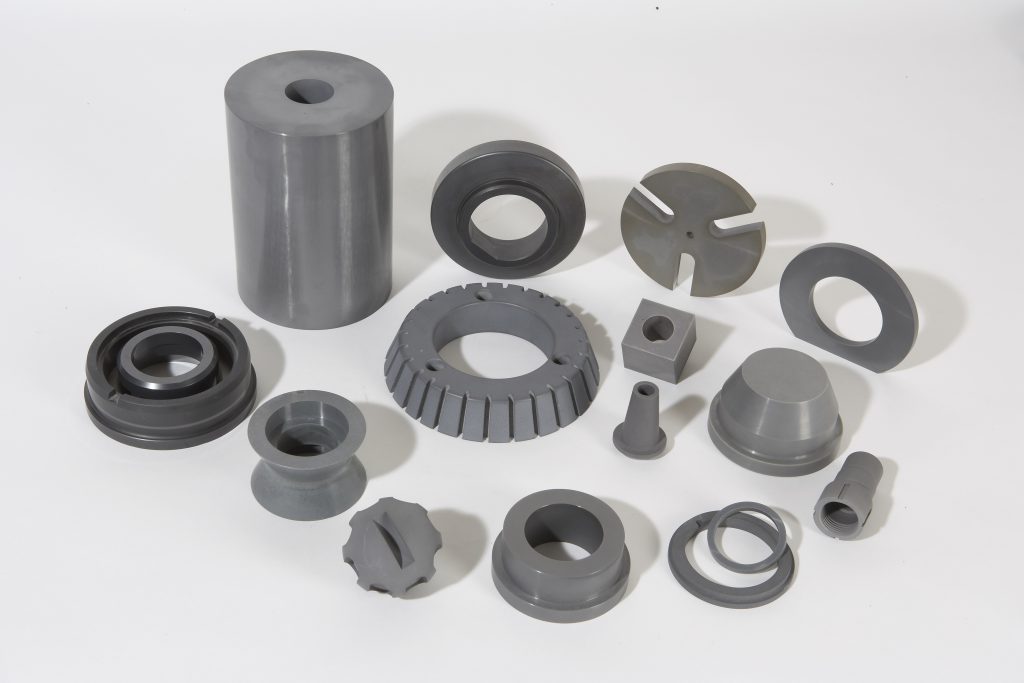
Applications in the Aerospace Sector
In the aerospace sector, silicon nitride ceramics are widely utilized in the thermal protection systems and radome components of high-speed aircraft, owing to their exceptional high-temperature resistance, ablation resistance, low density, and superior dielectric properties.
Thermal Protection and Structural Components: Porous silicon nitride ceramics combine the high-temperature stability inherent to silicon nitride with the low thermal conductivity and low density characteristic of porous materials, making them ideally suited for use as thermal protection shields for spacecraft. Furthermore, silicon nitride ceramics are employed in critical components such as turbine blades, combustion chamber liners, and missile radomes.
Radome Materials: With their low dielectric constant and low dielectric loss tangent, porous silicon nitride ceramics serve as ideal radome materials for the radar systems of high-speed aircraft.
Applications in the Mechanical Sector
In the mechanical sector, silicon nitride ceramics primarily serve as structural components requiring resistance to wear, corrosion, and high temperatures; their application has significantly extended the performance limits and service life of mechanical equipment.
Bearing Balls and Grinding Media: This represents one of the most classic and successful applications of silicon nitride ceramics. Compared to steel bearings, silicon nitride ceramic bearing balls possess a lower density (resulting in a 40% weight reduction), which substantially reduces centrifugal forces during high-speed rotation and extends bearing life. Additionally, their low coefficient of friction enables self-lubrication; their high hardness ensures excellent wear resistance; and their low coefficient of thermal expansion guarantees high operational stability. Consequently, they are widely deployed in high-speed, high-precision, or corrosive environments—such as in precision machine tool spindles, aircraft engines, electric vehicles, and chemical pumps. In the field of ultrafine grinding, silicon nitride ceramic grinding balls are gradually displacing traditional grinding media due to their high hardness, minimal wear, and low contamination characteristics.
Corrosion-Resistant and Wear-Resistant Components: In industries such as chemical processing and metallurgy, silicon nitride ceramics are utilized to manufacture components such as valves, sealing rings, nozzles, pipe liners, and thermocouple protection tubes. By leveraging their exceptional resistance to acid-base corrosion and particulate erosion, these ceramics effectively resolve the persistent challenges associated with metal components—namely, their susceptibility to corrosion and their limited service life.
Applications in the Semiconductor Sector
As electronic devices evolve toward higher power outputs and greater levels of integration, thermal management has emerged as a critical bottleneck. Due to its high theoretical thermal conductivity and excellent mechanical properties, silicon nitride ceramic has emerged as an ideal candidate material for the next generation of high-performance electronic packaging substrates.
Applications in the Medical Field
Possessing excellent biocompatibility, antimicrobial properties, osteogenic potential, and mechanical properties closely resembling those of human bone, silicon nitride ceramic holds immense promise for applications in the biomedical sector—particularly in the fields of orthopedic and dental implants.
Other Applications
Metallurgical Industry: Leveraging its exceptional resistance to molten metal corrosion and thermal shock, silicon nitride ceramic is utilized to manufacture components such as thermocouple protection tubes for molten aluminum temperature measurement, aluminum smelting furnace linings, crucibles, and launder channels; the service life of these components far exceeds that of stainless steel and corundum materials.
Automotive Industry: Silicon nitride ceramic turbocharger rotors have been adopted in high-end automobiles; their low density and low rotational inertia significantly reduce turbo lag, thereby enhancing engine responsiveness and efficiency.
Chemical and Environmental Industries: Characterized by high-temperature resistance, corrosion resistance, and high filtration precision, porous silicon nitride ceramics serve as effective materials for high-temperature gas filters, catalyst carriers, membrane separation components, and similar applications.