


The Application Value of Ball Mills
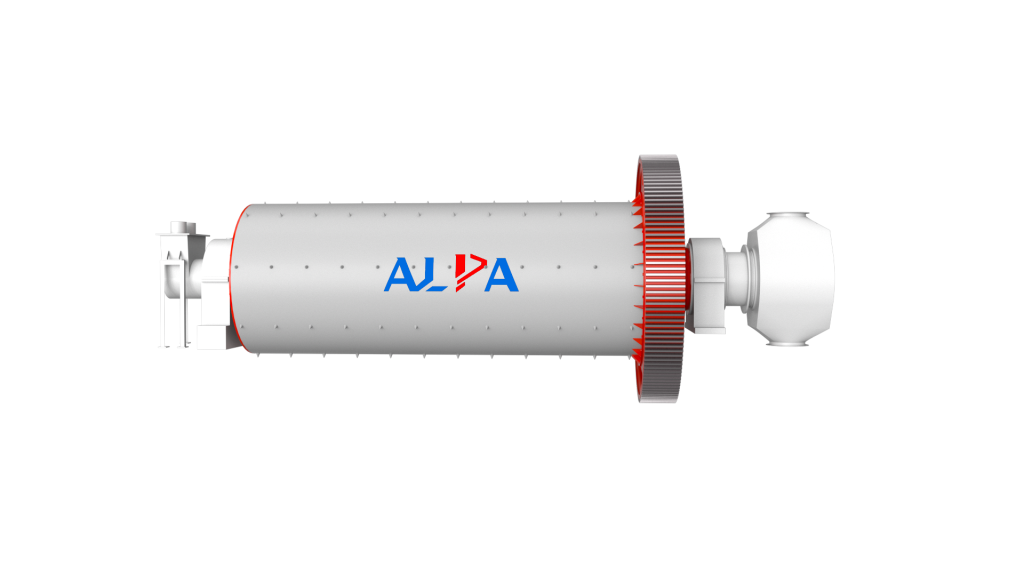
With the rapidly growing demand for fine particles in sectors such as the food and fine chemical industries, ultrafine grinding technology has garnered significant attention. Common ultrafine grinding techniques include jet milling, colloid milling, and ball milling. Among these, ball milling—a process that utilizes mechanical energy and thermal effects—alters the structure and properties of materials through friction, collision, and shear. It offers several advantages, including high product stability, superior processing quality, low costs, and an environmentally friendly, pollution-free operation; consequently, it is widely employed for the pulverization of a diverse range of materials, including minerals, food products, pharmaceuticals, and chemicals.
The operating principle of a ball mill primarily involves the rotation of material around the mill’s central axis, while the supporting plate rotates in the opposite direction. The combination of these two rotational speeds generates a centrifugal force that subjects the sample to intense friction and shear, resulting in ultra-fine particle size.
Based on their specific operating principles and characteristics, ball mills are generally categorized into three types: stirred (agitated) ball mills, vibratory ball mills, and planetary ball mills.
A vibratory ball mill utilizes high-frequency, simple harmonic vibration of the grinding chamber to induce vigorous impact, compression, and shear stress between the grinding media and the material, thereby enabling rapid size reduction and uniform mixing. Typically, such mills can reduce material to the micrometer (micron) scale.
Ball milling processes are categorized into dry and wet methods, depending on whether a liquid dispersion medium is added during the grinding process. In dry ball milling, dry materials are loaded directly into the mill; this approach offers advantages such as a streamlined process, ease of operation, and lower energy consumption, making it widely used in traditional sectors like food processing. Wet ball milling, by contrast, requires the addition of a dispersion medium to the material, with size reduction achieved through the friction, collision, and impact forces generated between the grinding media and the material. Although wet ball milling involves more complex process parameter control and operating conditions—often necessitating the use of grinding aids—the equipment itself is relatively simple in design, and it yields a highly uniform product. Whether dry or wet, the ultrafine grinding process utilizes powerful shear, impact, and collision forces to transform food raw materials into powders of varying particle sizes, thereby meeting a diverse range of application requirements.
There is a wide variety of ball mill types, and the milling outcome is influenced by numerous factors, such as the density of the grinding media, the number and size of the grinding balls, milling speed, milling duration, temperature, the ball-to-powder ratio, and the filling ratio. Due to the interplay of these variables, the energy delivered by a ball mill can vary significantly. Low milling energy results only in particle size reduction and an increase in specific surface area; however, high energy (high-energy ball milling) can lead to the breaking of chemical bonds and the initiation of chemical reactions. Therefore, the optimal milling conditions must be determined based on the desired outcome.
As a core method for ultrafine grinding, ball milling—leveraging the synergistic effects of intense mechanical force and thermal energy—has become an increasingly significant focus in the advanced processing of food. Its applications have expanded well beyond conventional size reduction to encompass the release of functional components, the modification of dietary fibers, and the enhancement of bioactive substances. Extensive research indicates that ball milling can significantly alter the physicochemical and functional properties of the processed materials. With the ongoing integration of intelligent equipment and a deeper understanding of the underlying process mechanisms, ball milling holds vast potential for applications such as the precise release of functional food components, the development of novel raw materials, and the comprehensive utilization of by-products.