


Air Classification in Ultrafine Powder Processing: Turning a Target Size into a Stable Product
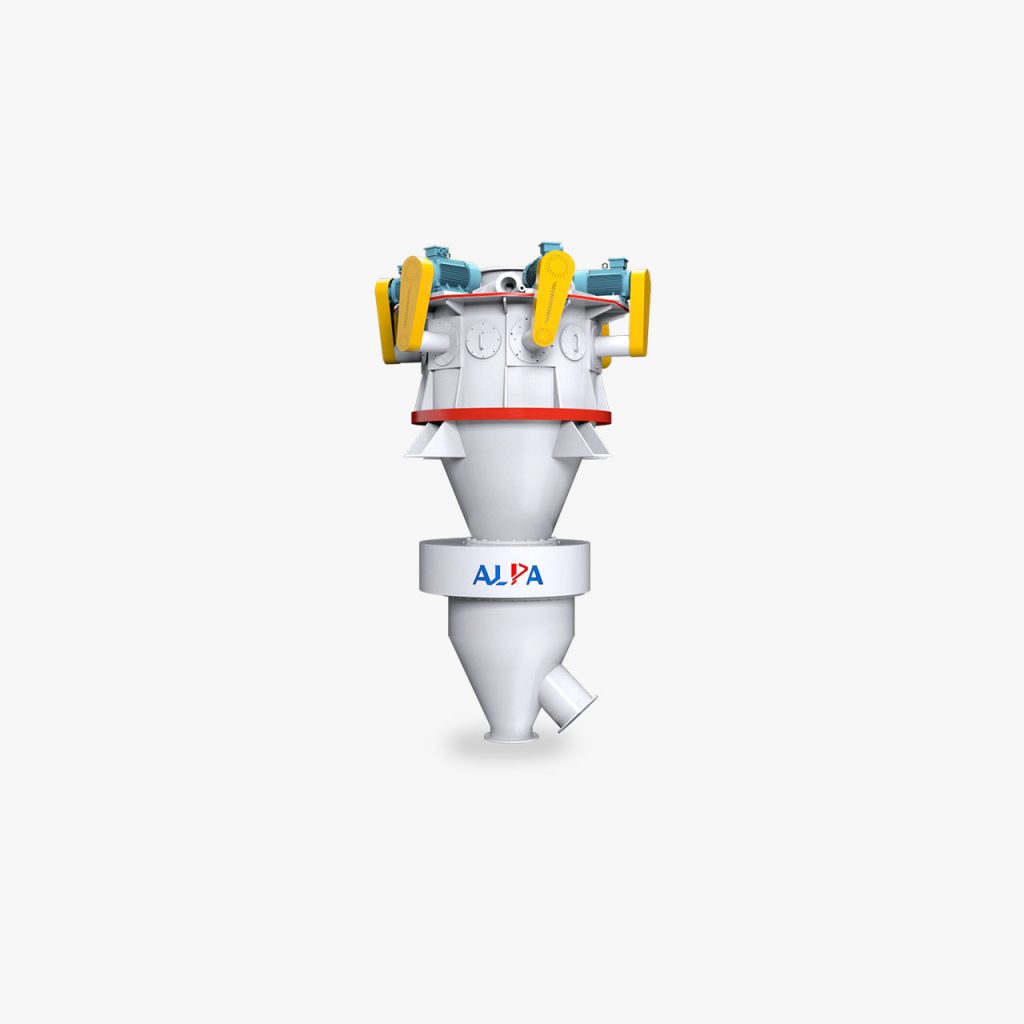
In ultrafine powder processing, grinding creates smaller particles, but classification determines which particles become the finished product. This distinction is important when a customer requires a defined upper particle limit, a narrow distribution or a stable grade from one production run to the next. A mill and classifier should therefore be considered as one process system.
An air classifier separates particles according to their aerodynamic behavior in a controlled air field. Rotor speed, air volume, feed rate and the condition of the incoming powder all influence the cut point and the final distribution. Raising rotor speed generally shifts the separation toward a finer product, but it can also change throughput and the proportion of material returned for further grinding. The best setting is not necessarily the highest speed; it is the setting that delivers the required specification with stable operation.
Feed consistency is often underestimated. Changes in moisture, bulk density, agglomeration or feed rate can alter how particles enter the classifying zone. When the feed varies, the same classifier setting may produce a different result. Good process control therefore begins upstream, with uniform feeding and appropriate preparation of the material.
The classifier also needs to be matched to the material and the process duty. Abrasive minerals may require wear-resistant protection, while high-purity materials may need carefully selected contact materials and a clean collection route. For materials with difficult flow behavior, conveying and deagglomeration must be considered together with the separation stage.
A stable ultrafine powder product comes from repeated control of the whole process: feed, grinding energy, air classification, collection and measurement. Recording key operating parameters and comparing them with particle-size results helps producers build a practical operating window instead of relying on one-off settings. This makes troubleshooting faster when raw-material or production conditions change.