


Opportunities and Challenges of Bamboo Powder as a Filler for Biodegradable Plastics
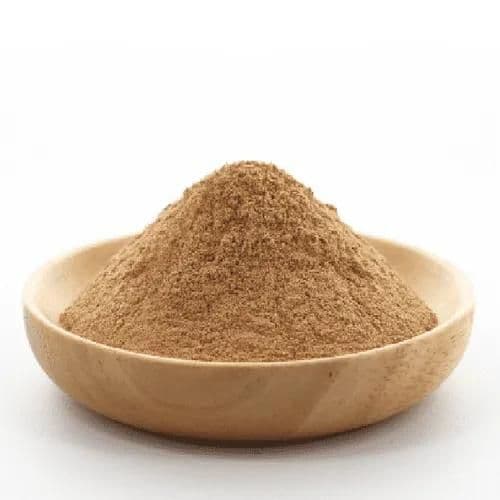
What is Bamboo Powder? Bamboo powder is a powdery substance derived from bamboo raw materials through physical processing methods such as crushing, grinding, and sieving; it is classified as a type of filler additive. After bamboo timber undergoes processing, approximately 30% of the resulting waste material can be converted into usable bamboo powder. As a significant biomass filler material, bamboo powder is widely utilized in various sectors—including daily consumer goods, agriculture, and industrial excipients—offering both environmental and economic benefits.
The primary constituents of bamboo powder include organic components such as cellulose, lignin, and hemicellulose; it also contains various other substances, including ash, proteins, lipids, and pectin. According to research conducted by the Fujian Academy of Forestry, when using three-year-old Moso bamboo (Phyllostachys edulis) as the raw material, cellulose accounts for 37.3% of the bamboo powder’s composition, while lignin accounts for 24.5%.
How is Bamboo Powder Classified?
As a vital biomass filler material, bamboo powder is extensively employed in the development of plastic products across diverse fields—including daily consumer goods, construction engineering, transportation, and agriculture—due to its characteristics of being eco-friendly, low-carbon, biodegradable, and cost-effective. Given that the physicochemical properties and application performance of bamboo powder are highly dependent on its particle size distribution, bamboo powder is categorized into four main classes based on particle size and intended application: Coarse Bamboo Powder, Fine Bamboo Powder, Micro Bamboo Powder, and Ultrafine Bamboo Powder.
Coarse Bamboo Powder (Millimeter-scale): This category consists of processing residues generated during the rough planing, fine planing, and wire-drawing of standardized bamboo strips. This type of bamboo powder retains its complete bamboo fiber structure; it exhibits strong moisture absorption but poor flowability, and is primarily utilized as a filler for cat litter, animal feed, cement mortar, and Bakelite.
Fine Bamboo Powder (60 μm ≥ D90 > 30 μm): This category is produced by processing bamboo timber residues using high-speed pulverizers equipped with ring rollers. This type of bamboo powder begins to exhibit a certain degree of surface activity, and its specific surface area increases significantly. When incorporated as a filler into biodegradable polyesters—and processed via techniques such as injection molding, thermoforming, and compression molding—it can be used to manufacture products such as knives, forks, spoons, coffee cups, seedling trays, and nursery pots. Micro-bamboo powder (30 μm ≥ D90 > 10 μm): Produced from bamboo processing residues using a tandem system comprising a ring-roller mill (high-speed pulverizer) and an air classifier. Within this specific particle size range, the functional properties of the bamboo powder undergo a significant transformation; specifically, its hydrophilicity and adsorption capacity are markedly enhanced. It serves as an ideal filler for biodegradable shopping bags, courier bags, trash bags, flat bags, T-shirt bags, and seedling bags.
Ultra-fine bamboo powder (D90 ≤ 10 μm): Produced from bamboo processing residues via a four-stage tandem process: ring-roller milling, air classification, air-jet pulverization, and a final air classification. At this stage, the bamboo powder exhibits extremely high surface energy and possesses characteristics akin to nanomaterials, making it suitable for the production of biodegradable agricultural films.
What are the performance advantages of using bamboo powder as a filler?
Compared to other organic and inorganic filler materials, bamboo offers distinct advantages when utilized as a filler for film and bag materials. These advantages are primarily manifested in the following five aspects:
1) Low tapped density [the tapped densities for bamboo powder with particle sizes of 60, 30, 20, and 10 μm are 0.33, 0.26, 0.23, and 0.17 g/cm³, respectively], which effectively reduces logistics costs; 2) High polysaccharide content and low ash content, facilitating easy cross-linking with polyester and thereby contributing to improved mechanical properties in the film and bag materials; 3) High starch content, resulting in excellent processability and plasticity; 4) Abundant porosity and high permeability, enabling the formation of a stable interlocking structure with the polyester matrix; and 5) Low processing costs, requiring neither high-end equipment nor complex manufacturing processes.