


Why Drilling Fluids Use Finely Ground Barite
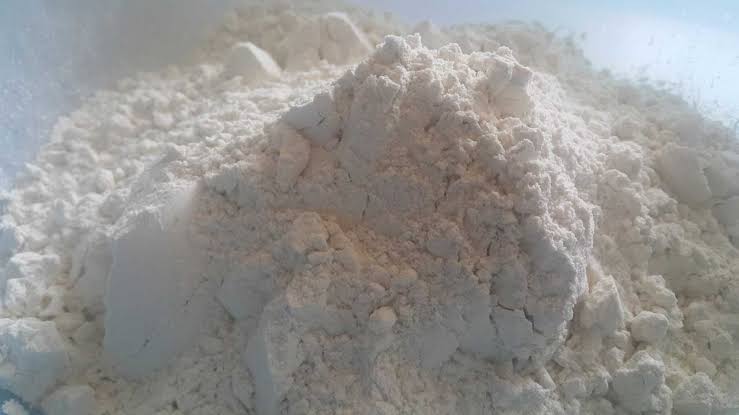
What makes barite a good weighting material?
Barite is a naturally dense mineral composed of barium sulfate. It dissolves so little in water that the ground grains remain in the mud as solid particles. A small volume of these grains adds substantial mass. A lighter mineral would occupy more space in the same fluid to achieve the same density. This matters because the mud must also flow through the circulating system and carry rock cuttings back to the surface.
What changes when the ore is ground?
Grinding changes the size of the grains while their mineral density stays essentially the same. Coarse grains tend to settle faster than finer grains of the same mineral in the same fluid. If too much barite settles, some zones become richer in solids and others become lighter. This uneven distribution, known as barite sag, can occur even while mud is moving through an inclined section of a well.
At the other end of the size range, very fine grains expose more surface to the liquid for each kilogram of powder. Depending on the formulation, increasing this fine fraction can make the mud more resistant to flow. Powder producers can use an air classifier after grinding to take out a coarse fraction for another pass through the mill. Grains already in the intended product range leave the circuit, limiting the amount of extra fine material made by repeated grinding.
How should a buyer read the powder specification?
Start with two entries on the product sheet. Specific gravity compares the density of the solid grains with that of water. Lighter minerals in the ore, such as quartz, can lower that value. The particle size distribution shows how the powder is divided between coarse grains and fines. Two lots with the same median size can still leave different amounts of coarse material on the same test sieve. Reading both entries helps explain why powders that look equally fine in the bag can behave differently once mixed into drilling fluid.