


Application of Diamond Powder in Heat Dissipation for High-End Chips
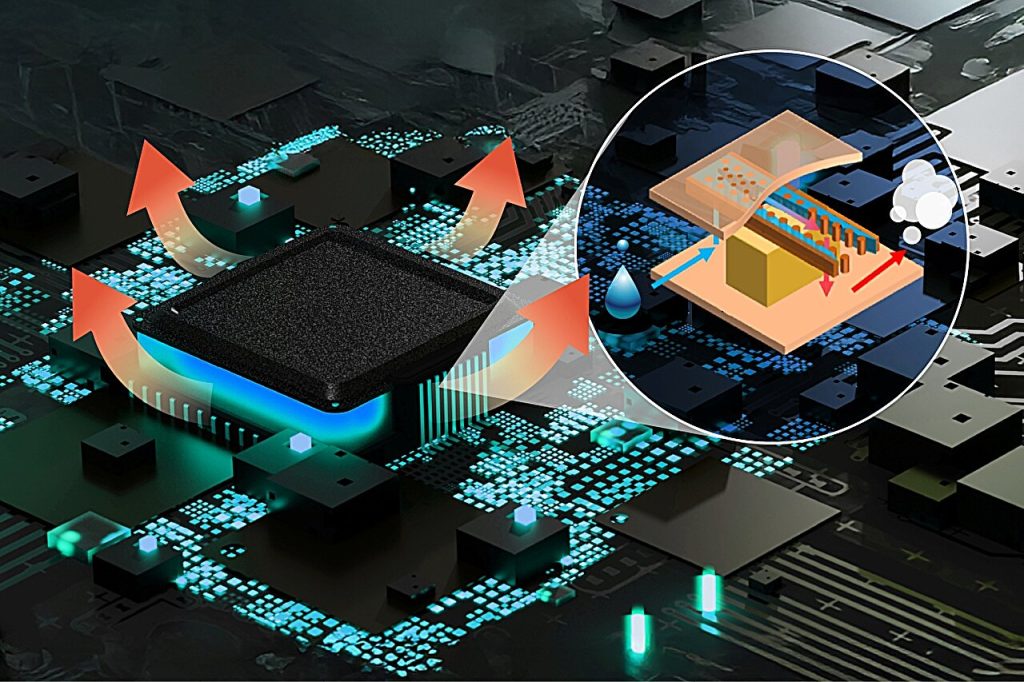
With the rapid evolution of AI computing power and the mounting thermal management challenges facing high-end chips, diamond—a material with exceptional thermal conductivity—is emerging as a promising new semiconductor material.
Diamond’s superior thermal conductivity stems from its unique microstructure, where heat transfer relies primarily on lattice vibrations. The extremely high bond energy of the C-C bonds and the low mass of the carbon atoms restrict atomic vibration to the vicinity of the potential energy minimum; this characteristic imparts an exceptionally high thermal conductivity to the material. Simultaneously, because all valence electrons in diamond are involved in bonding and cannot move freely, the material acts as an excellent electrical insulator. This combination of high thermal conductivity and electrical insulation significantly broadens its potential applications.
Micron- or nano-scale diamond powders—characterized by a narrow particle size distribution, favorable morphology, high purity, and minimal internal defects—exhibit outstanding thermal conductivity. They can be incorporated into metal-matrix composites for use as heat sinks or heat-dissipation substrates, or utilized as functional fillers in the production of thermal interface materials such as thermal pastes, adhesives, and pads.
**Preparation of Diamond Micropowder**
Currently, the primary industrial method for producing diamond micropowder is the static high-temperature, high-pressure (HTHP) synthesis followed by crushing. This process uses coarse-grained single-crystal diamond particles—synthesized via the static HTHP method—as raw material, which then undergo crushing, purification, and classification.
**(1) Preparation of Diamond Raw Material**
The HTHP method utilizes graphite powder and metal catalyst powder as primary raw materials. Under conditions of high temperature (typically 1300–1700°C) and high pressure (5–7 GPa), the catalyst facilitates a phase transition that converts the carbon source (graphite) into diamond.
**(2) Grinding and Shaping**
The grinding and shaping processes directly influence the particle morphology and the yield of the target particle size. Generally, there are two fundamental methods for reducing relatively coarse material to micron or sub-micron sizes: mechanical impact and jet milling.
(3) Classifying
Particle size classifying is a crucial step in the production process of diamond micropowder, directly influencing both production efficiency and product quality. Currently, many manufacturers employ a combination of natural sedimentation and centrifugation methods to produce a full range of micropowder grades, spanning from fine to coarse.
Thermal Conductivity Application I: The Optimal Solution for Thermal Fillers
Thermal fillers are dispersed within a polymer matrix (such as silicone or epoxy resin) to form a composite material. This material fills the microscopic gaps between heat-generating components and heat sinks, thereby reducing contact thermal resistance and establishing a continuous heat conduction network to rapidly dissipate accumulated heat. As the core raw material for thermal interface materials—including thermal grease, pads, and potting compounds—these fillers directly determine the efficiency and stability of the thermal management system.
Thermal Conductivity Application 2: High Performance Diamond/Metal Composite Materials
Based on the excellent physical properties of diamond such as high thermal conductivity, low expansion coefficient, and low density, researchers in recent years are developing metal-based highly thermally conductive composite materials using diamond particles as reinforcements. The excellent thermophysical properties of diamond/metal composite materials give it important application potential in the field of packaging.
As the demand for thermal management continues to escalate, diamond powder is poised for significant growth. With ongoing improvements in surface modification and composite processing technologies, current limitations regarding interfacial applications will be progressively overcome, positioning diamond powder to become a critical, essential material for high-end thermal management in the semiconductor industry.