


Grinding particles enhance value
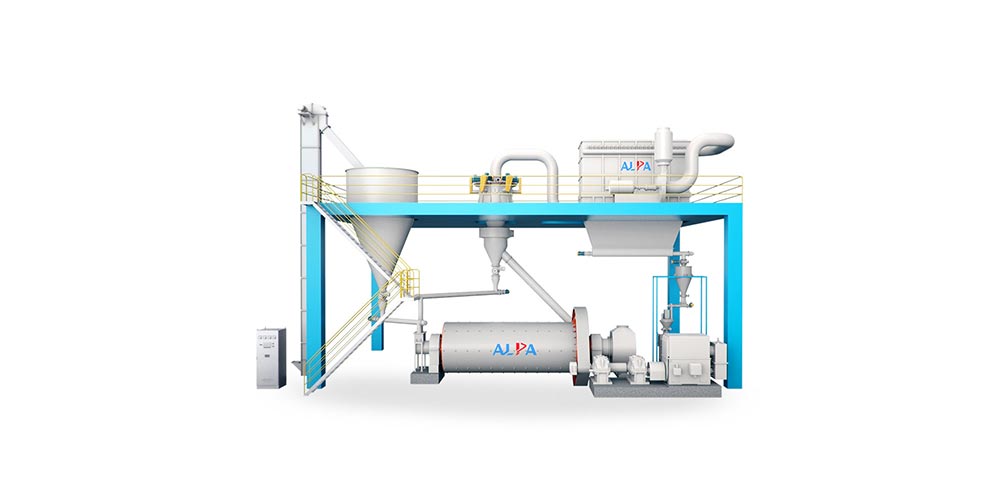
With the rapidly increasing demand for fine particles in industries such as food and fine chemicals, ultrafine grinding technology has attracted widespread attention. Common ultrafine grinding technologies include air jet milling, colloid milling, and ball milling. Among them, ball milling is a method that utilizes mechanical energy and thermal effects to change the structure and properties of materials through friction, collision, and shearing. It has the advantages of stabilizing samples, producing high-quality products, low cost, and being environmentally friendly and pollution-free, and is widely used in crushing various minerals, food, pharmaceuticals, and chemical materials.
The working principle of a ball mill is mainly that the material rotates around the rotating shaft of the ball mill, while the support plate rotates in the opposite direction. The combination of these two speeds generates a certain centrifugal force, which makes the sample undergo sufficient friction and shearing, thereby achieving an ultrafine state.
Ball milling processes can be divided into dry and wet methods, depending on whether a liquid dispersion medium is added during the grinding process. Dry ball milling directly feeds dry materials into the mill for grinding, offering advantages such as a short process, simple operation, and low energy consumption, making it widely used in traditional fields such as grain processing. Wet ball milling, on the other hand, requires the addition of a dispersion medium to the material, utilizing the friction, collision, and impact between the grinding medium and the material to achieve pulverization. Although the process parameters and operating conditions of wet ball milling are more complex, often requiring the addition of grinding aids, its equipment structure is relatively simple, and the product exhibits good grinding uniformity. Regardless of whether it is a dry or wet method, the ultrafine grinding process can process food raw materials into powders of different particle sizes through powerful shearing, impact, and collision forces, thereby meeting diverse application needs.
There are many types of ball mills, and the ball milling effect is affected by multiple factors, such as the density of the grinding material, the number and size of the grinding balls, grinding speed, grinding time, grinding temperature, ball-to-material ratio, filler ratio, etc. Due to the combination of these variables, the energy delivered by a ball mill varies greatly. If the grinding energy provided is low, only changes in particle reduction and specific surface area increase will occur; but if the energy is high (high-energy ball milling), the decomposition of chemical bonds and the occurrence of chemical reactions can be achieved. Therefore, depending on the desired effect, the optimal grinding conditions must be determined.