


How do you choose a jet mill for pulverizing lithium salts?
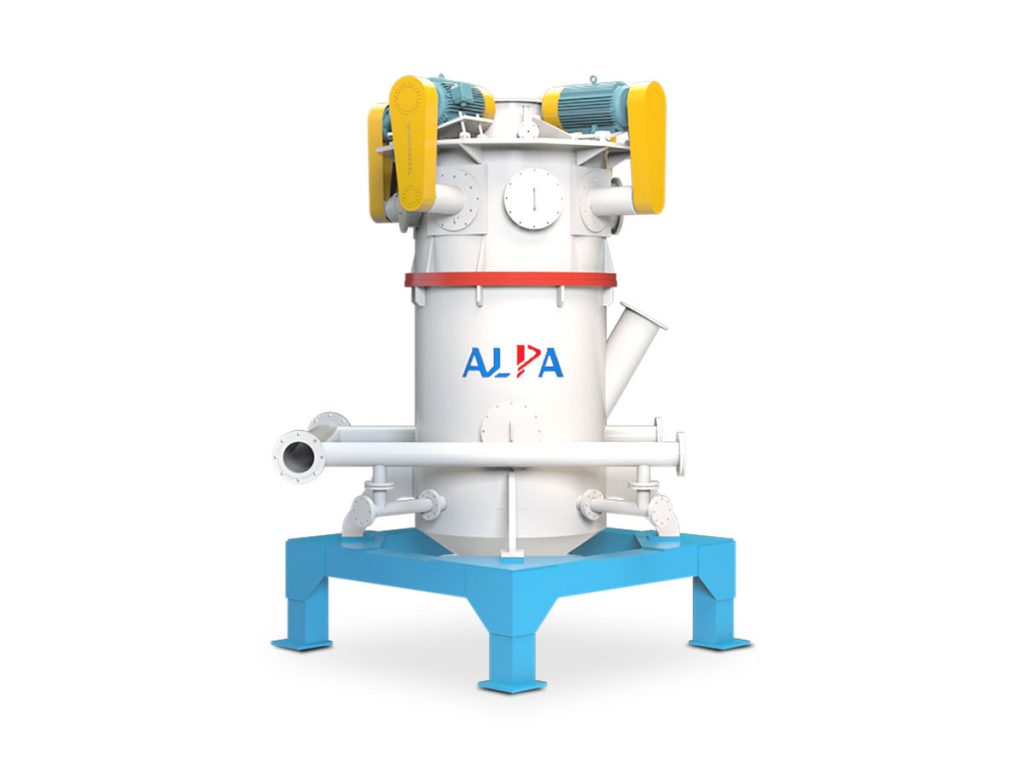
The jet mill is a critical piece of equipment for ultrafine pulverization, capable of reducing materials to powders with particle sizes in the micrometer range. Also known as an air jet mill or fluid energy mill, it utilizes high-speed gas streams or superheated steam to pulverize materials through inter-particle collisions, friction, and shearing. In the new energy battery materials sector, manufacturers of battery-grade lithium salts must further pulverize crystallized and dried lithium carbonate or lithium hydroxide products to meet the processing requirements of downstream lithium battery manufacturers. Currently, the industry primarily employs jet mills to pulverize dried battery-grade lithium salt particles to achieve the required product particle size specifications.
Given the production characteristics of battery-grade lithium salts, the prevailing equipment design is the fluidized-bed type. By installing a classifier at the outlet of the fluidized-bed jet mill, the synergistic action of the fluidized bed and the classifier ensures that the lithium salt product meets user specifications regarding particle size and particle size distribution.
The working principle of the fluidized-bed (opposed-jet) jet mill involves directing gas through a set of nozzles (more than two) to create an opposed-jet flow field within the grinding chamber, thereby fluidizing the material. At the intersection point of the nozzle jets, particles undergo intense collisions, friction, and impact, resulting in pulverization. Under negative pressure, the pulverized powder passes through the classifier; product meeting specifications is collected by a cyclone separator and dust collector, while coarser particles that do not meet requirements fall back into the grinding zone under gravity for further processing.
Compared to other pulverizers, fluidized-bed jet mills offer advantages such as a narrow particle size distribution, high grinding efficiency, low energy consumption, minimal product contamination, and low wear on components; however, the initial equipment cost is relatively high. Since the material must be fluidized to be pulverized by the colliding gas jets, these mills typically require the feed material to possess a certain degree of fineness—a requirement that is particularly critical for high-density materials.
As an effective ultra-fine grinding technology, jet milling has become a crucial stage in the production of battery-grade lithium salts. The commissioning of jet milling equipment demands a high level of technical expertise and professionalism; during operation, users should ensure sufficient material residence time, maintain stable air supply pressure, and strictly adhere to operating procedures to achieve optimal grinding performance, thereby reducing energy consumption and ensuring consistent product quality.